June 2024

HPAPI CDMO Market (By Product: Synthetic, Biotech; By Drug Type: Innovative, Generic; By Application: Oncology, Hormonal Disorders, Glaucoma, Others; By End User: Pharmaceutical Companies, Biotechnology Companies, Virtual Biotech Firms, Academic & Research Institutes) - Global Industry Analysis, Size, Share, Trends and Forecast 2026 - 2035
The global HPAPI CDMO market size accounted for USD 9.40 billion in 2025 and is estimated to surpass USD 27 billion by 2035 growing at a CAGR of 11.1% from 2026 to 2035.
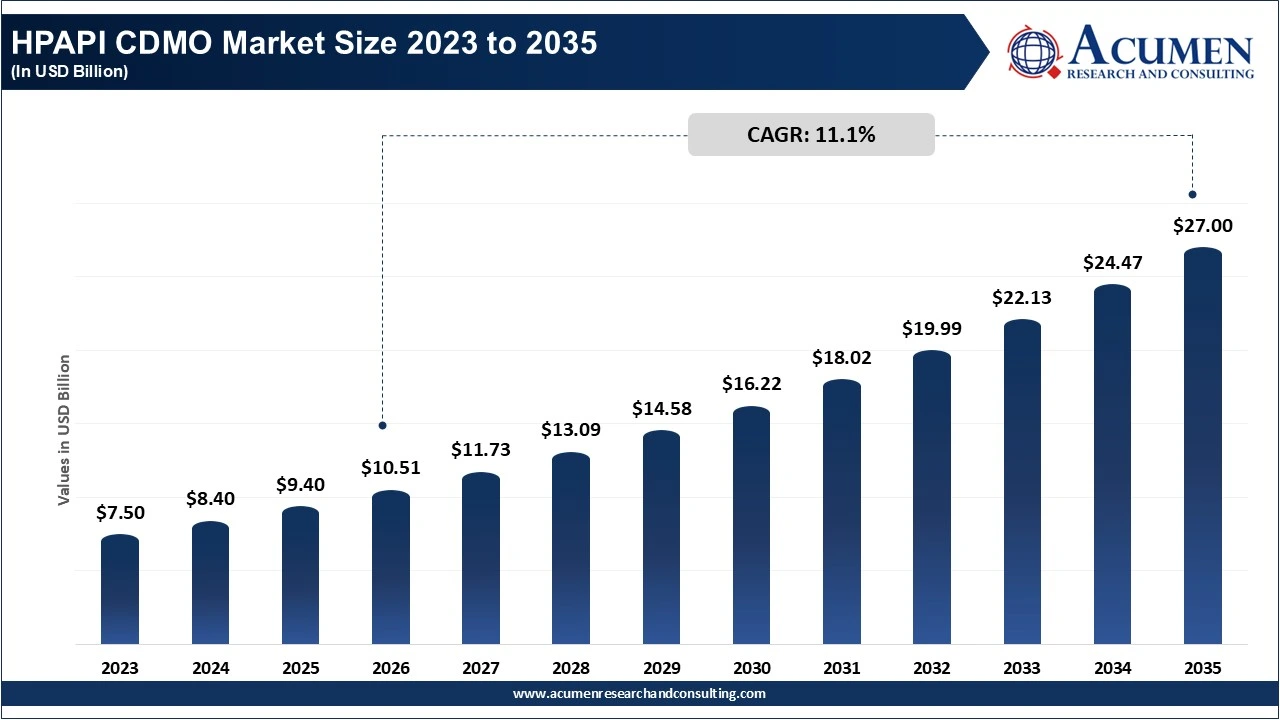
High potent active pharmaceutical ingredient (HPAPI) CDMOs are specialist contract development and manufacturing organizations that focus on the research and production of very potent active pharmaceutical ingredients. These chemicals are exceedingly effective even at low concentrations, making them essential for targeted therapy, especially in oncology, hormone treatments, and immunology. HPAPI CDMOs offer end-to-end services like as medication discovery, formulation, and large-scale production, all while maintaining strict safety and containment standards. Their knowledge is vital for dealing with high-potency chemicals that necessitate specialist facilities and equipment. HPAPI CDMOs are becoming increasingly important in the pharmaceutical sector as demand for precision medicine and focused medicines grows it will enhance high potent active pharmaceutical ingredient (HPAPI) CDMO market growth forward.
1. Growing demand for oncology drugs and targeted therapies:
Increasing cancer cases across the globe has given rise to a great demand for HPAPIs. A lot of the current oncology drugs which use antibody drug conjugates (ADCs) or target certain cancer pathways requires special manufacturing capabilities that companies often don't have. Such drugs hence rely heavily on CDMOs and their high potent containment facilities. With ever increasing cancer drug pipeline globally, HPAPI manufacturing is expected to grow at a high rate.
2. Rising trend for Pharmaceutical outsourcing to specialty CDMOs:
In order to avoid the high cost and risks of manufacturing highly active ingredients pharmaceutical manufacturers are increasingly outsourcing complex and dangerous processes to specialized CDMOs. The building of a HPAPI facility requires substantial cost of containment facilities, safety, as well as compliance with regulations, which is where contracting to CDMOs offers a cost-effective alternative. Apart from that, outsourcing allows faster turnaround of manufacturing drugs which is very important as in a competitive drug pipeline.
High Manufacturing costs and high security need:
HPAPI necessitates the use of sophisticated containment equipment, and facilities along with rigorous handling protocols to protect the worker and the environment. The costs involved in investing on and maintaining such a setup are quite prohibitive for new entries into the market. The running costs too are high owing to the use of highly specialized equipment, protective infrastructure, and the management of hazardous waste. It restricts the expansion of the market, and drives up the cost of the services rendered.
1. Increasing Investment in Biopharmaceutical R&D and personalized medicine:
The surge of focus on personalized medicine and biologics is fueling strong demand in HPAPI manufacturing services, Pharmaceutical companies are increasingly investing in novel targeted therapeutics requiring highly potency and complex compounds. Personalized medicine are anticipated to require a higher quantity of smaller batches of highly specific medications, raising dependency on adaptable CDMO services. These trends signal tremendous growth opportunities.
2. Increasing Collaboration & Strategic partnership to broaden capacity and innovate:
Partnership between pharmaceutical companies and CDMOs is growing in the favor of meeting escalating demand and overcoming production capacity limitations. Collaborative alliances assist in hastening drug development processes, augmenting production facilities and better securing supply chains. Many CDMOs are signing into strategic, long-term collaborations that enhance their services and global reach.
The rising global prevalence of cancer is boosting demand for effective oncology medications and targeted therapies. According to the American Cancer Society Press Room, almost 20 million new cancer cases were identified in 2022, with 19.2 million people dying from the disease worldwide. By 2050, the number of cancer cases is expected to reach 35 million. HPAPIs play an important part in these treatments because of their high potency and ability to selectively assault cancer cells. As precision medicine advances, the demand for high potent active pharmaceutical ingredient (HPAPI) CDMO market grows significantly.
Furthermore, pharmaceutical companies are increasingly outsourcing HPAPI manufacturing to specialized CDMOs, leveraging their advanced containment technologies and regulatory knowledge which ultimately enhance high potent active pharmaceutical ingredient (HPAPI) CDMO market growth. For example, in June 2022, Wuxi STA announced the expansion of its HPAPI plant in China, enabling it to serve CDMO customers seeking a complicated manufacturing setup. This enables pharmaceutical companies to outsource high-potency medication manufacture in a safe and efficient manner, allowing them to grow production and get medicines to market faster. As a result, CDMOs have flexible production capabilities, allowing pharmaceutical businesses to scale more efficiently and reduce time-to-market significantly drives high potent active pharmaceutical ingredient (HPAPI) CDMO market growth.
HPAPI production necessitates complex containment systems and stringent safety standards to protect workers and avoid cross-contamination. This leads to high manufacturing costs and requires large investment in specialized infrastructure. The challenge of establishing safe operational settings restricts the number of manufacturers who can handle HPAPIs and slowdown high potent API CDMO market growth.
The growing emphasis on customized medicine and biologics is driving expenditures in biopharmaceutical research and development which become opportunity for high potent active pharmaceutical ingredient (HPAPI) CDMO market. For example, the International Society for Pharmacoeconomics and Outcomes Research (ISPOR) estimates that global R&D expenditure in 2021 will be $276 billion across 4191 global firms, with total net revenues of $1022 billion across 583 companies. Furthermore, the United States is the global hub for biopharmaceutical R&D, with roughly 48% of global companies involved in biopharma R&D headquartered there, accounting for 55% of global R&D spending and 65% of all development-stage financing. HPAPIs are critical for developing tailored medicines, presenting potential for CDMOs that specialize in high-potency production. As precision medicine advances, the demand for high potent active pharmaceutical ingredient (HPAPI) contract manufacturing market is projected to increase.
North America held the major share of the HPAPI CDMO market attributed to the developed R&D infrastructure, higher acceptance rate of outsourcing and robust pipeline for oncology drugs. US has the world's largest pharmaceutical and biotech industry, driven by robust demand from HPAPI manufacturing in outsourced contracts. Increasing prevalence of cancer and autoimmune disorders escalates the need for development of potent drugs.
To bring down expenses and regulatory risks in hazardous manufacturing of HPAPIs, pharma firms increasingly prefer to outsource production to specialized CDMOs. Patent expiry and expansion of pipeline are additional catalysts for increasing outsourcing. There is rise in US pharma and biotech firms investing in ADCs and targeted therapies which depend critically on manufacturing of HPAPIs. This leads to an increased demand for specialized containment facilities and strong CDMO relationship.
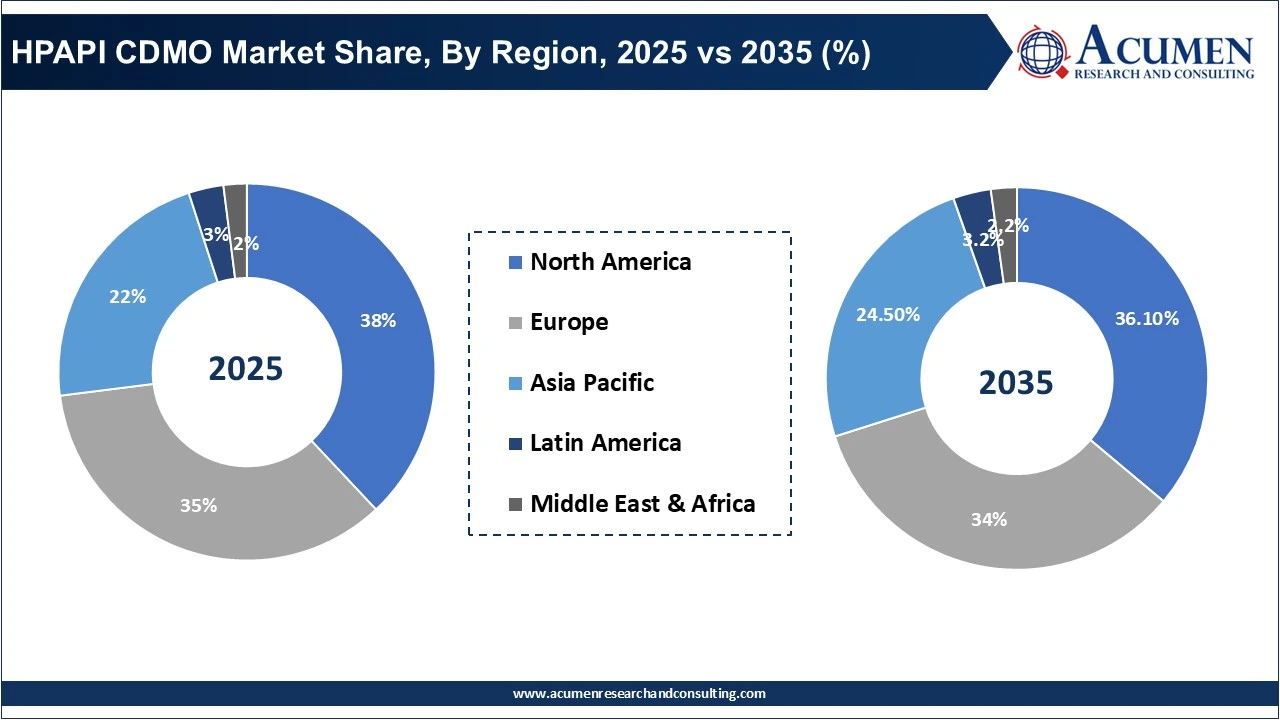
Asia Pacific region is projected to witness the highest CAGR over the forecast period due to the extensive growth of the pharmaceutical manufacturing, and due to low cost outsourcing opportunities. Pharmaceutical companies are relocating their manufacturing base in Asia Pacific due to cost advantages in manufacturing and a vast pool of skilled labor. In this region governments are promoting domestic manufacturing and incentivizing overseas CDMO investment. India and China are becoming global manufacturing hub of HPAPIs outsourcing due to the increase in investment in containment capabilities and high potency drug manufacturing.
The worldwide market for HPAPI CDMO is split based on product, drug type, application, and geography.
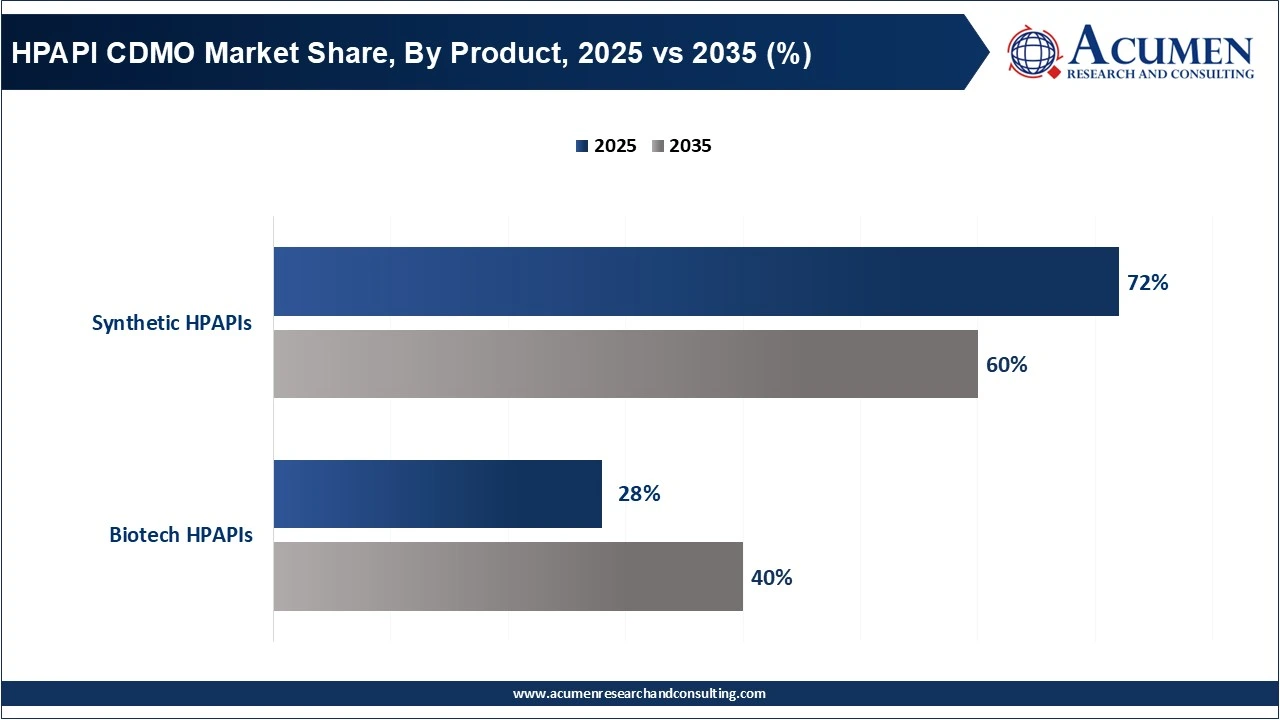
According to the HPAPI CDMO industry analysis, synthetic products are dominant due to their complicated chemical structures and exact manufacturing requirements, which necessitate specialized facilities and knowledge. These chemicals are commonly employed in targeted therapeutics, particularly in oncology, where high potency and selectivity are required. Synthetic HPAPIs provide greater control over molecular design, resulting in improved efficacy and safety profiles. Furthermore, advances in chemical synthesis processes have improved production efficiency and scalability, contributing to their high potent API CDMO market domination.
As per the HPAPI CDMO industry analysis , the innovative medication type leads sector because of its significance in meeting unmet medical requirements, particularly in complicated diseases such as cancer and autoimmune disorders. These medications frequently contain highly potent molecules that necessitate specialized containment and production processes, which CDMOs are prepared to deliver. As pharmaceutical companies focus more on novel therapeutics, such as targeted biologics and personalized medicine, the demand for innovative HPAPIs grows. Furthermore, patent exclusivity and premium price associated with novel pharmaceuticals increase profitability, supporting their position in the high potent API CDMO market.
HPAPI CDMO Market Revenue Share, Drug Type, 2025 VS 2035(%)
| Drug Type | 2025 (%) | 2035 (%) |
| Innovative | 68% | 72% |
| Generic | 32% | 28% |
According to the HPAPI CDMO market forecast, oncology applications dominate business, owing to the increased demand for targeted cancer medicines based on very potent active pharmaceutical ingredients. These medicines necessitate precise production and containment solutions, which CDMOs excel at, ensuring safety and efficacy. With cancer as the top cause of death worldwide, pharmaceutical companies are spending substantially in innovative oncology treatments such as antibody-drug conjugates and kinase inhibitors. This increase in oncology R&D pipelines fuels demand for HPAPIs, reinforcing the segment's dominance in the high potent API CDMO market.
HPAPI CDMO Market Revenue Share, Application, 2025 (%)
| Application | Revenue Share, 2025 (%) |
| Oncology | 68% |
| Hormonal Disorders | 16% |
| Glaucoma | 5% |
| Others | 11% |
HPAPI CDMO Market Revenue Share, End User, 2025 (%)
| End User | Revenue Share, 2025 (%) |
| Pharmaceutical Companies | 52% |
| Biotechnology Companies | 28% |
| Virtual Biotech Firms | 12% |
| Academic & Research Institutes | 8% |
By Product
By Drug Type
By Application
By End User
By Region
Looking for discounts, bulk pricing, or custom solutions? Contact us today at sales@acumenresearchandconsulting.com

June 2024
April 2023
January 2021
April 2025
Trusted Market Intelligence | 2026–2035 Insights | Designed to Support Faster, Smarter Decisions
Thank you! Our team will reach out to you soon.